Cluster headaches and the migraine piercing?
Cluster headache is a complaint that comes in periods with severe pain, similar to migraine. It affects many people, mainly men between 20 and 50. Besides the headache, other symptoms may also develop, which are important to take seriously, which is why you should definitely see a doctor if you have complaints!
If you would like to find out what you can do about cluster headaches, this article is for you!
Cluster headache – everything worth knowing
Cluster headache is one of the primary headaches, which means that no other illness lies behind it; the complaint is actually triggered by excessive activity of the pain receptors . It got its name from the cyclically recurring headache attacks, in other words from the cluster periods.
One of its main characteristics is that the pain can develop within a few minutes, without any warning symptoms, and is sharp, piercing or burning in nature. The headache is accompanied by a characteristic eye symptom: as if a hot stick had been stuck into the eye, or as if the eye wanted to fall out of its socket. Just like migraine, cluster headache develops on one side only, and occurs in the same place throughout life.
Other typical symptoms can include:
· restlessness
· the pain gets worse when lying down; movement tends to ease it
· being alone feels better
· red eyes, watering on the affected side
· symptoms also typical of migraine: sensitivity to light and sound, nausea
· autonomic symptoms: nasal congestion, facial flushing and swelling (on the affected side), sweaty, pale skin, narrowed pupil, drooping eyelid
While the last two symptoms may persist for a long time after the attack, the other symptoms stop together with the headache.
Risk factors for cluster headache can include:
· alcohol consumption
· smoking
· male sex
· age between 20 and 50
As for what you can do about cluster headaches, we will cover that below.

Against cluster headaches: this is what you can do
Unfortunately, cluster headache cannot currently be cured, so the first and most important thing is to ease the symptoms, thereby shortening the duration of the attack and reducing the chance of attacks developing.
Cluster headache is treated most often with medication, set by a neurologist. This may mean using a milder, over-the-counter painkiller, but more serious active ingredients may also be needed. In some cases, if drug therapy has not brought results in the long term, surgery may be needed, during which various stimulating devices are implanted.
IMPORTANT! If cluster headaches make everyday life significantly harder and other symptoms also accompany them, see a doctor, who will diagnose the underlying cause and suggest treatment.
This is how the migraine piercing worked against cluster headaches for our guests
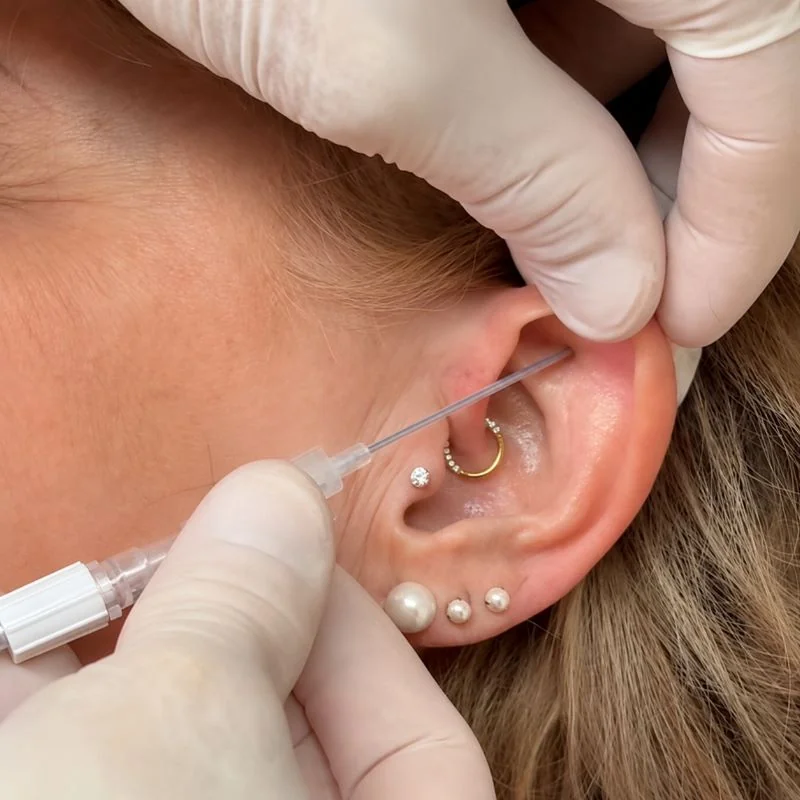
The migraine piercing, this wellbeing body jewel, is pierced into a special point in the ear, and as a result it keeps the 10th cranial nerve, the vagus, under constant stimulation. Many thousands of our guests have reported that, as a result, their pain and their anxiety decreased.
For many, the migraine piercing significantly reduced the intensity and frequency of cluster headaches, and thanks to its calming, stress-reducing effect they also reported an anxiety-relieving effect.
The placement of the migraine piercing is in the fold above the ear canal, in a small, winding piece of cartilage, so we are talking about a hard-to-reach spotthat requires precision to pierce.
The positive effect of the migraine piercing is also supported by the following research
A study carried out by the London Migraine Clinic examined people with migraine who had received a Daith piercing.
The results of the study are as follows:
- 75% of the participants state that after the piercing was placed their headaches eased significantly or went away completely
- 82% of those with the piercing are completely satisfied
- only 11% reported that they did not notice a significant change after the piercing
According to the doctors who carried out the study, Dr Chris Blatchley and Professor Arnold Wilkins, this procedure puts less strain on the body than constant use of medication, and if the piercing is done by the right specialist, the rate of positive results may be even higher.
How much does the migraine piercing hurt?
We are all unique, and that is exactly why we also perceive pain differently. What is nothing to you may cause someone else severe pain.
Since determining the place of the migraine piercing requires a thorough preliminary examination and location, and this is the longest part of the process, the insertion itself is very short and takes only a few moments.
Many people come to me very anxious about the pain, but afterwards they are amazed at how short the piercing is and that they hardly feel it. They put it like this: “as if some insect had just stung me”. However, this passes almost immediately as soon as I insert the migraine piercing jewel made of medical-grade metal.
The perception of pain may depend on several things, for example:
· your current stress level
· how tired you are
· in women, the menstrual cycle
For many people, this unpleasant moment is soon forgotten, as soon as they experience the beneficial effects of the migraine piercing against cluster headaches.
Migraine piercing price
At Medical Piercing, the migraine piercing costs only 24,900 forints.
The price includes:
- assessment, precise location
- immediate placement of the piercing
- piercing made of medical-grade metal, sterilised in an autoclave
- guarantee
- guest follow-up, feedback
- access to our Facebook migraine group
- regular information by e-mail about what you need to know about the piercing
Our wellbeing piercings do not count as a cure and do not replace medical treatment; the description of their effectiveness is based on our guests’ feedback.
Give the migraine piercing a chance! I look forward to seeing you at my Budapest practice, book an appointment online!