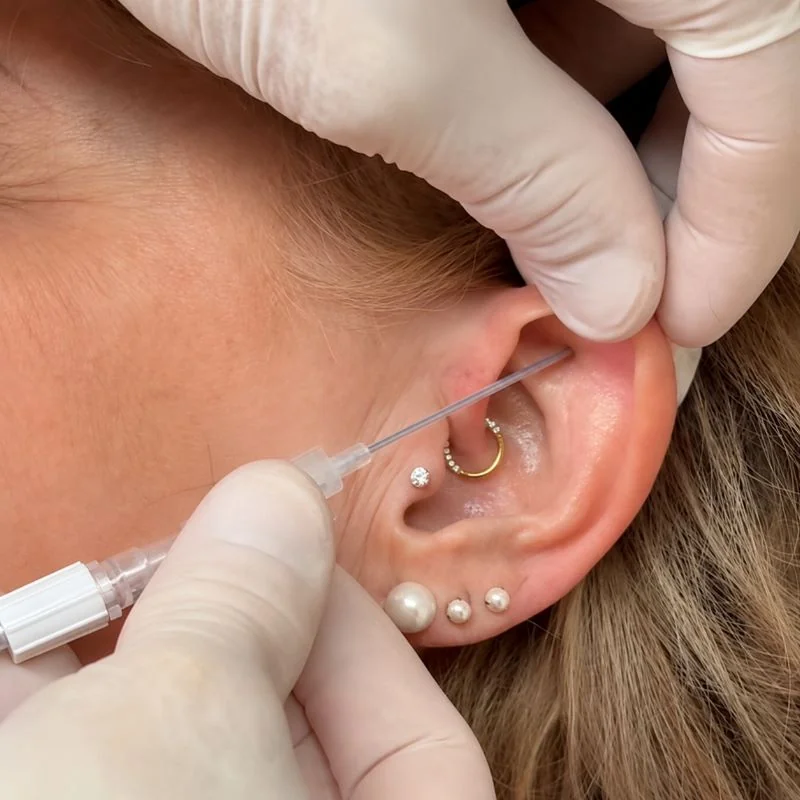
Shenmen piercing for sleep problems?
Struggling with long-standing sleep problems? Or have they just developed, and you would like to do something about them now? Come and find out more from our article!
We cover what sleep problems mean, what causes them, what normal sleep is, and how the Shenmen piercing for sleep problems has helped others!
What are sleep problems?
A sleep disorder is a particular condition in which you may have difficulty either falling asleep or staying asleep. Sleep disorders can take many forms, for example insomnia, breathing problems during sleep (such as sleep apnoea), parasomnias (such as sleepwalking or night terrors), or sleep rhythm disorders.
Sleep disorders can have a serious effect on a person’s quality of life and general health, so if there is a problem, the most important thing is to find the right treatment with the help of a specialist. We will soon come to how the Shenmen piercing works for sleep problems, but first let’s clarify a few essential questions on the subject.
What can cause sleep problems?
Sleep problems can be triggered by many different things, and they may also develop as a result of several factors. The most common causes can be:
Lifestyle factors: For example irregular sleeping times, too much caffeine or alcohol, frequent daytime naps – even smoking can trigger them!
Stress and anxiety: Because of stress or anxiety, a person may have difficulty falling asleep or sleeping peacefully.
Health conditions: Certain health problems, for example chronic pain, breathing problems, gastro-oesophageal reflux disease (GERD), allergies or hormonal imbalances, can contribute to sleep problems.
Medication: Sleep problems can arise as a side effect of some medicines, for example stimulants, antidepressants, allergy medication, blood pressure medication, or alcohol and steroids.
Environmental factors: Disturbing environmental factors, for example noise, a room that is too light or too dark, the wrong temperature (too cold / too warm), or a badly chosen mattress or pillow, can all contribute to sleep problems.
Genetic factors: For example, insomnia or breathing problems during sleep can be linked to a family predisposition, which means that people are more likely to develop sleep disorders if others in their family have also suffered from such problems.
What is normal sleep like?
What “normal sleep” means can vary from person to person; it is worth taking our own needs into account. Here are 7 interesting facts worth knowing about physiological sleep.
- Sleep is not a uniform state but cyclical in nature. Light, deep and rapid eye movement (REM) sleep phases usually alternate over several cycles.
- On average, adults need 7–9 hours of sleep a day; this much time is needed for proper rest and regeneration. With age this number of hours decreases, as older people need less sleep.
- We distinguish two main sleep cycles: the NREM (non-REM) phase and the REM phase. NREM sleep includes both light and deep sleep, while dreams appear during REM sleep.
- Sleep has a regular rhythm, which is regulated by the body’s internal biological clock, the so-called circadian rhythm . This clock responds to the daily cycles of light and darkness and helps regulate the sleep–wake cycles.
- People usually sleep at night, when the body’s natural circadian rhythm prepares for sleep, and are active during the day. This sleep and wake pattern can, however, change as a result of night shifts, changing time zones (jet lag) or other circumstances.
- It is well known that there are many sleeping positions, for example on your back, side or front. But few people know that your body position can influence the quality of your sleep.
- To ensure restful sleep, a comfortable, quiet, dark and cool environment is recommended. The right mattress, pillows and duvet can also be important not only for comfort but also for improving the quality of sleep.
Knowing the general characteristics, it is important to keep an eye on your sleep habits, and if any problem arises, consult a specialist about what could be done about the sleep problem.
Shenmen piercing for sleep problems – can it help?
According to Chinese medicine, the Shenmen point in the ear is an area connected to general wellbeing and stress reduction, because a branch of the vagus nerve runs through it. So by stimulating the Shenmen point, a calm, relaxed state can be achieved.
The vagus nerve (Latin: nervus vagus, the 10th cranial nerve) is an important nervous system pathway connected to many organs and tissues in the body. Several studies have already examined the effect of vagus nerve stimulation on sleep and general wellbeing, and most research agrees on the following points:
- Stimulating the vagus nerve may contribute to reducing stress and to relaxation. Reducing stress may help improve sleep quality and ease sleep problems.
- Stimulating the nerve activates the parasympathetic nervous system, which operates in the “rest and digest” state. As a result, calm, restful sleep can be achieved.
- Treating the vagus nerve may reduce inflammation in the body. As sleep and inflammation may be connected, reducing inflammation may contribute to better sleep quality.
- Stimulating the 10th cranial nerve may help improve mood and maintain emotional stability. Emotional balance and a positive mood may promote sleep and sleep quality.
Sleep problems and insomnia have been treated with acupuncture in China since ancient times.
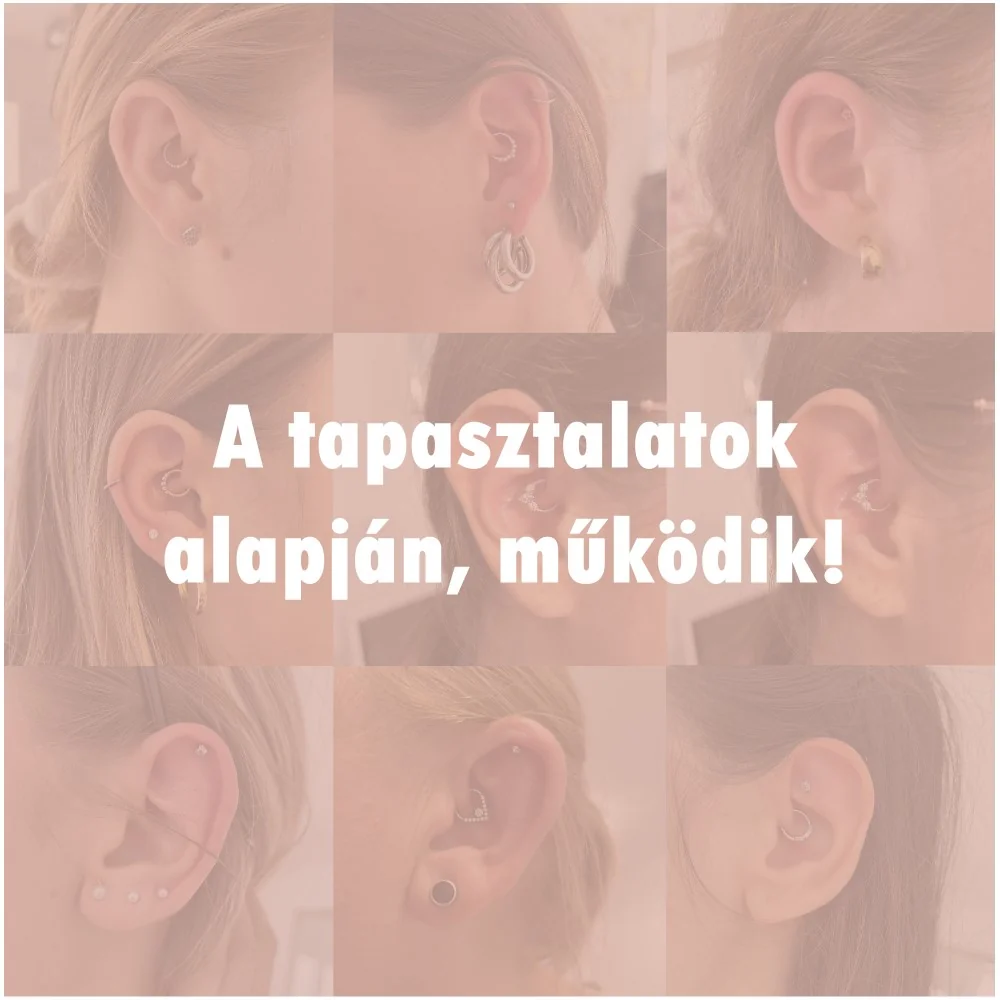
Patients have reported that, placed in the Shenmen point, the Shenmen piercing really helped them with sleep problems. They found that after the jewellery was placed, the quality of their sleep improved significantly; thanks to the calmer state, falling asleep was much easier, and they reached deeper sleep phases.
If you struggle with sleep problems, it is important to understand that everyone is completely unique, and what may help some people will not necessarily be as effective for others. If someone struggles with sleep problems, it is recommended to consult a specialist, for example their doctor or a sleep specialist. Treatment of sleep disorders includes lifestyle changes, therapy, medication or other, alternative treatments, which may be demonstrably effective in treating sleep disorders.
Our wellbeing piercings do not count as a cure and do not replace medical treatment; the description of their effectiveness is based on our guests’ feedback.
Would you like to try the Shenmen piercing too? Click and book an appointment at our studio in central Budapest now!