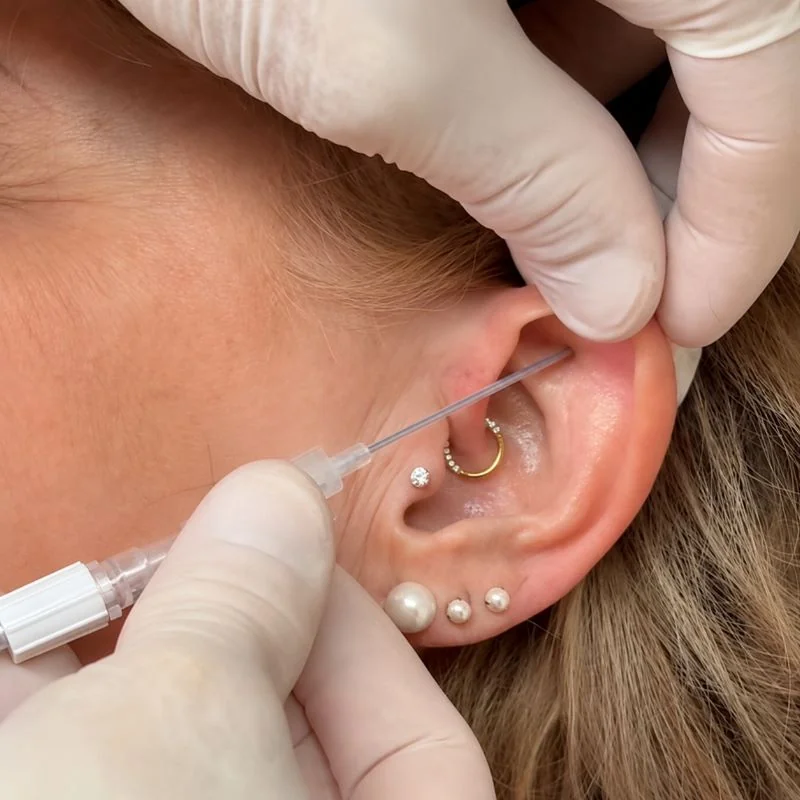
Shenmen piercing – this is what the process looks like
Piercing the Shenmen raises many questions for people thinking of having this type of wellbeing body jewel done. In the article below we have tried to collect for you everything important to know about how much the piercing hurts, how the process itself takes place (step by step), and what is worth paying attention to afterwards.
How much does the Shenmen piercing hurt?
The feeling of pain can vary from person to person, and many factors can influence how painful a given person will find the Shenmen piercing insertion. These include the individual’s pain threshold, the sensitivity of the area and the piercing specialist’s routine and technique.
In general, the Shenmen piercing is not one of the most painful ear piercings. Since the piercing site is in the upper part of the ear, where the skin is thinner and less sensitive, for many people it may involve relatively mild pain. However, everyone reacts to pain differently, and for some people the insertion may be a more sensitive or unpleasant experience.
However, the pain often lasts only a short time, and for many people the whole process is much less painful than they first thought. In addition, an experienced piercing specialist can carry out the process routinely and efficiently, thereby minimising pain and discomfort. If you are worried about the pain, it is always worth sharing these concerns with the specialist, who can then offer help and support during the process.
Step by step: how a Shenmen piercing is done
A Shenmen piercing is done in 6 steps. Let’s look at them in detail!
1. Assessment: At Medical Piercing, the first step is for the specialist you have chosen to assess your needs regarding the piercing, examine the condition of your ear and ask about your medical history if you have any complaint or problem. You can ask us anything! We always explain the process and answer any questions you have. Then we start the preparation, which includes cleaning and disinfecting the area.
2. Preparation: Before the piercing, our specialist makes sure that every instrument is sterile-packed and ready for the procedure. This may include wearing medical gloves, using disinfectant solutions, and preparing sterile needles and jewellery.
3. Determining the exact place of the piercing: First, we mark the place of your piercing on your ear. The Shenmen piercing is usually located in the upper part of the ear cartilage. Before choosing the location, it is important to take into account the anatomy of your ear and your aesthetic preferences.
4. Placing the Shenmen piercing: Once the place has been marked, your piercer begins the piercing. For this we use a sterile needle, which is usually guided to the right place with the help of a piercing needle. It is important to carry out this process quickly and decisively, to minimise pain and injury.

5. Inserting the jewellery: As soon as the needle has passed through the ear, we quickly insert the jewellery. This jewellery may be a ring or a bar, depending on the type of piercing you prefer. The jewellery must meet health regulations and must be sterile before insertion, which is exactly why, at the Medical Piercing studio, for the first piercing we insert jewellery made of medical-grade metal that has been sterilised on site in an autoclave.
6. Final steps: Once the jewellery is in, our specialist cleans and disinfects the area, then gives you instructions on caring for the piercing and on the healing process. This usually includes using disinfectant solutions, cleaning the jewellery gently and touching it as little as possible during the healing period.
It is important to note that every piercing process may be a little different depending on the specialist’s preferences and the anatomy of the area. Always ask your piercer any questions you have, and follow the instructions they give during healing and piercing aftercare.
What to pay attention to after the piercing
After the Shenmen piercing, proper hygiene and care are particularly important for a successful healing process. The Shenmen piercing’s healing time is usually 6–8 weeks, although this can be individual and also depends on how well the person follows the instructions and how much attention they pay to the piercing during the healing period.
A few useful hygiene rules worth following:
Always wash your hands! Always wash your hands thoroughly with soap and water before touching or cleaning the piercing area. This prevents bacteria from being transferred to the piercing, which could lead to infection.
Disinfect it! After the piercing has been placed, it is a good idea to spray the area morning and evening with Medical Piercing’s own aftercare spray while it is inflamed; then, 2 weeks after the piercing, 1 drop of oil can also go on the wound. You can buy the aftercare kit at our studio.
Avoid dirt and dirty water! Avoid swimming pools, jacuzzis, lakes and other contaminated water until the piercing has fully healed. Bacteria in such places can cause infection.
Don’t fiddle with your piercing! Especially if your hands are not sterile. Avoid rubbing the piercing area or putting it under pressure, to avoid tissue damage and prolonging the healing process.
Don’t remove the jewellery too early! Don’t take the jewellery out during the healing time unless your piercer advises otherwise. The jewellery helps the piercing site heal properly, and removing it during healing can cause problems.
Watch out for signs of inflammation! Check the area around the wound every day for, for example, redness, swelling, pain or a pus-filled spot on your ear. If you notice any such symptom, contact your piercing specialist or a doctor immediately.
IMPORTANT! These are only general guidelines; always follow the specific instructions and advice given by your piercing specialist. During the healing period, pay extra attention to the piercing and the surrounding areas to ensure successful healing and to minimise the risk of infection.
Pain after the piercing
Pain is specific to the individual and to the healing process. In general, however, the greatest pain and discomfort are experienced in the first few days or week after the Shenmen piercing is inserted. During this time the affected area may be swollen, sensitive and painful to the touch.
The pain may ease considerably after the first few days and may gradually decrease during the healing period. Mild pain or sensitivity may still occur throughout the healing period, especially when the piercing is touched or pressed.
However, it is important to watch for persistent pain or discomfort. If the pain is severe or lasts longer and does not ease as expected, or if you notice any other significant symptom, such as severe swelling or a pus-filled bump, see a doctor or your piercing specialist immediately, as these may be signs of infection and may require treatment.
Have we dispelled your doubts about the Shenmen piercing and the pain? Would you also like such a wellbeing body jewel? Then book with us through our online calendar!